
Stop rewriting the same content across every page
Paazaa gives your team one structured content layer for pages, services, resources, and reusable business details so updates stay fast, consistent, and safer to publish.

Build a content engine your team can trust after launch
What content operations should publish first
Start with model content once and reuse it across service pages, landing pages, and resources, then make the page specific enough for a visitor to understand the offer, the proof, and the next action. This keeps the first version focused while still creating a foundation for structured content models.
What should connect behind the page
The page should hand work to the right system after a visitor acts. Connect update shared business details in one place instead of chasing copy across multiple pages to reusable updates across pages, ownership, status, and follow-up so the team is not copying context between tools.
How to know the rollout is working
Use publish approved changes with clear review steps and lower risk as the operational check, then measure whether launch new pages faster without duplicating core content. and whether keep service details, calls to action, and business information consistent.. If those results are weak, improve the page structure before adding more traffic.
Readiness checks before this solution goes live
Visitor decision points
Make the page answer the questions a visitor has before they act: what is offered, why it is credible, what happens next, and how fast the team can respond. For content operations, structured content models should be visible enough that the next step feels obvious rather than buried in a generic contact path.
Team ownership
Assign a clear owner for reusable updates across pages before launch. The page should have someone responsible for content accuracy, submission review, status updates, and stale information. That keeps the workflow useful when traffic, requests, or publishing volume increases.
Expansion path
Use CMS and Pages & Publishing when the first version needs more depth. The goal is not to add features everywhere; it is to strengthen safer draft-to-publish flow only where it helps launch new pages faster without duplicating core content. and keep service details, calls to action, and business information consistent..
Capabilities that make this solution operational
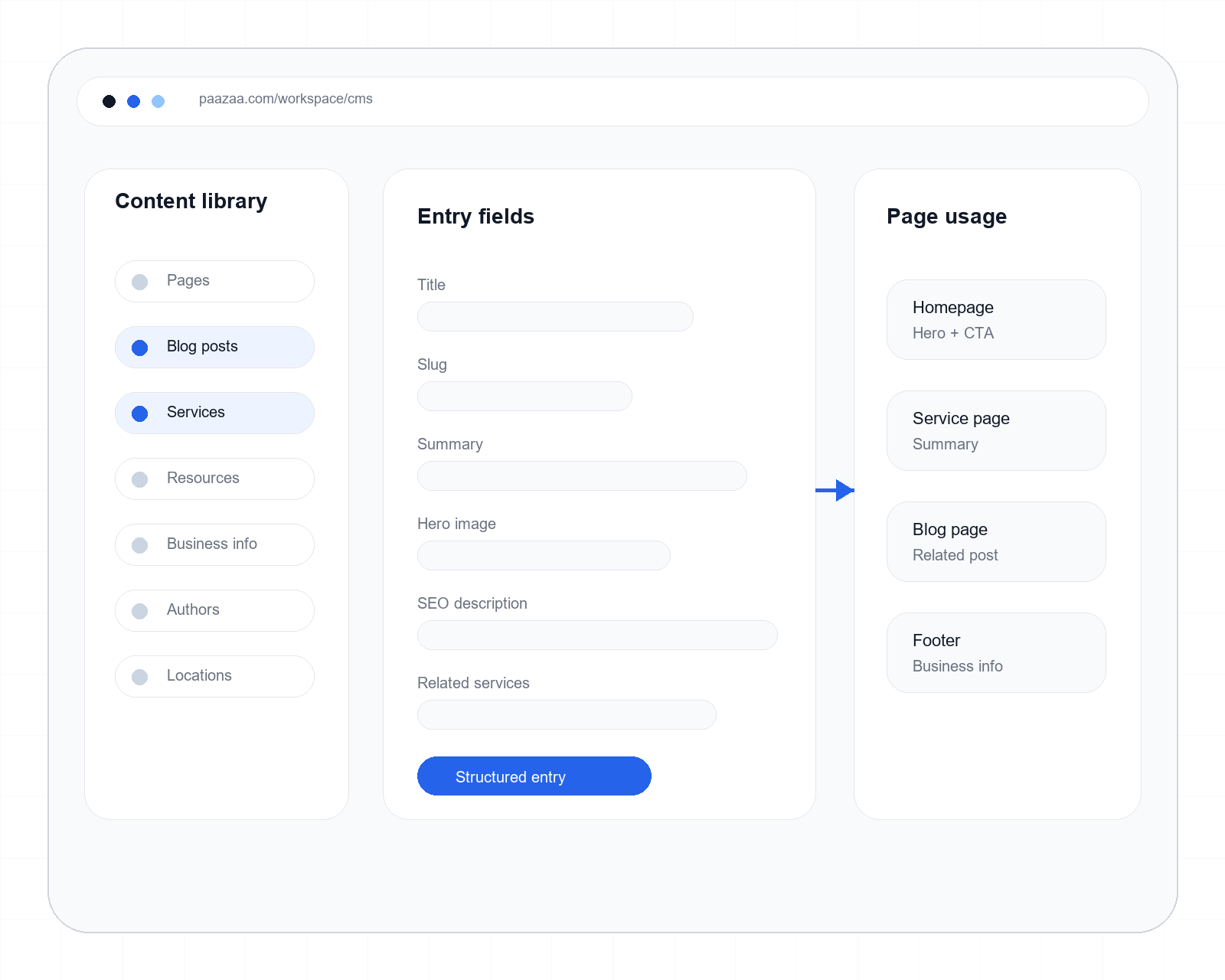
Structured Content Models
Define repeatable content types and fields for services, pages, FAQs, resources, and business details before the site gets messy.
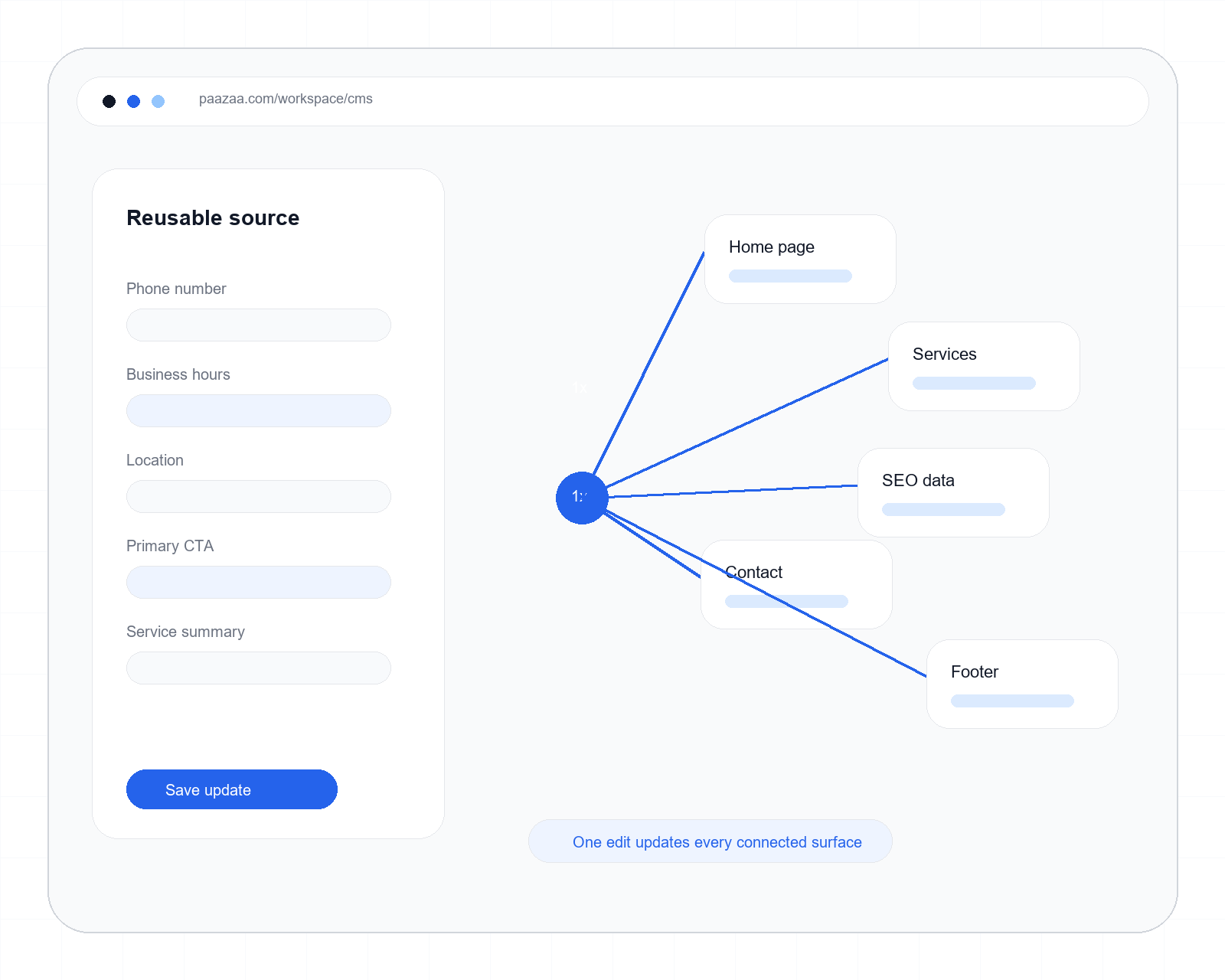
Reusable Updates Across Pages
Change shared details once, then apply those updates across every page and section that depends on them.
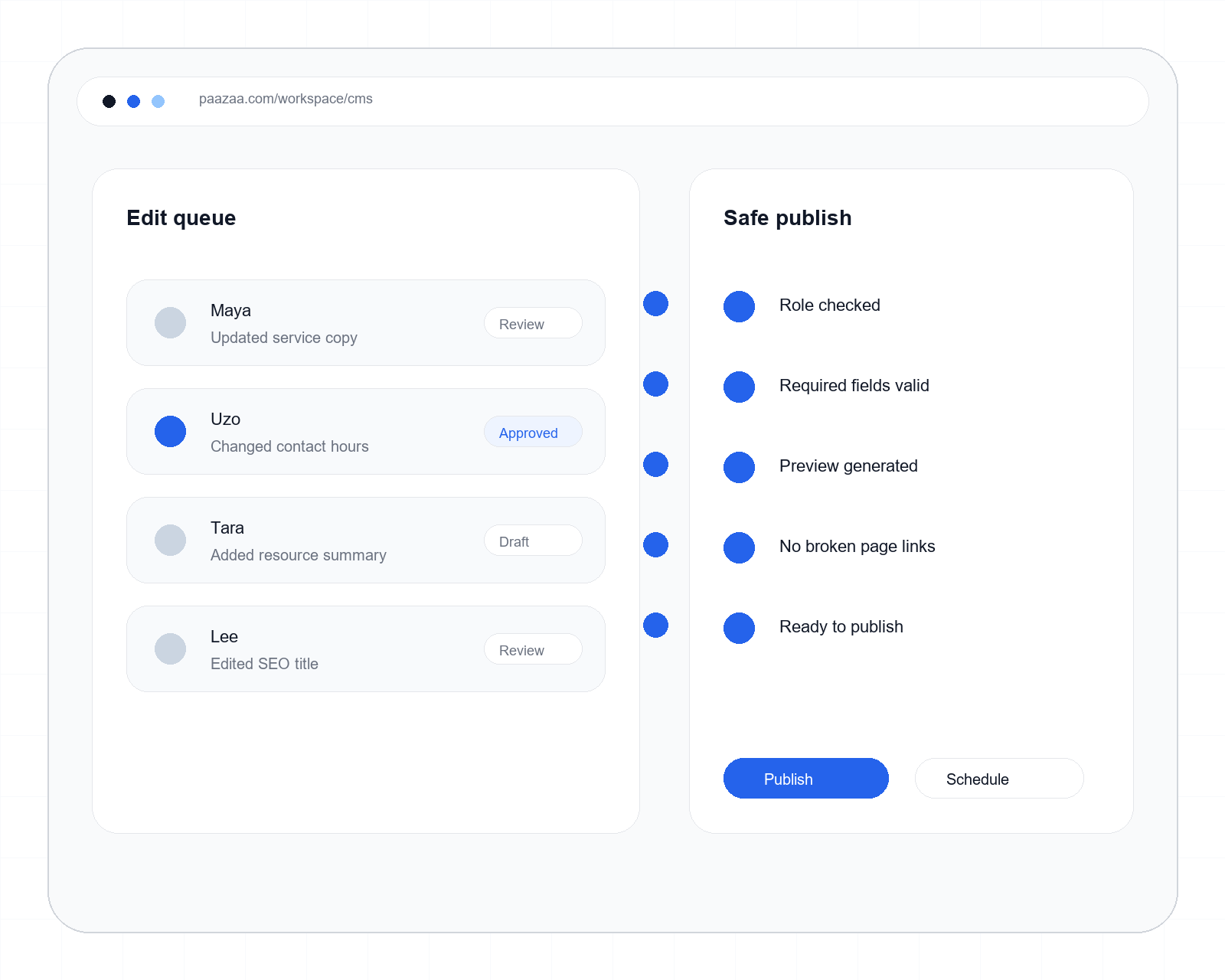
Safer Draft-to-Publish Flow
Let teams draft, review, and publish content updates without touching layout structure or risking accidental page breakage.
How teams put this solution to work
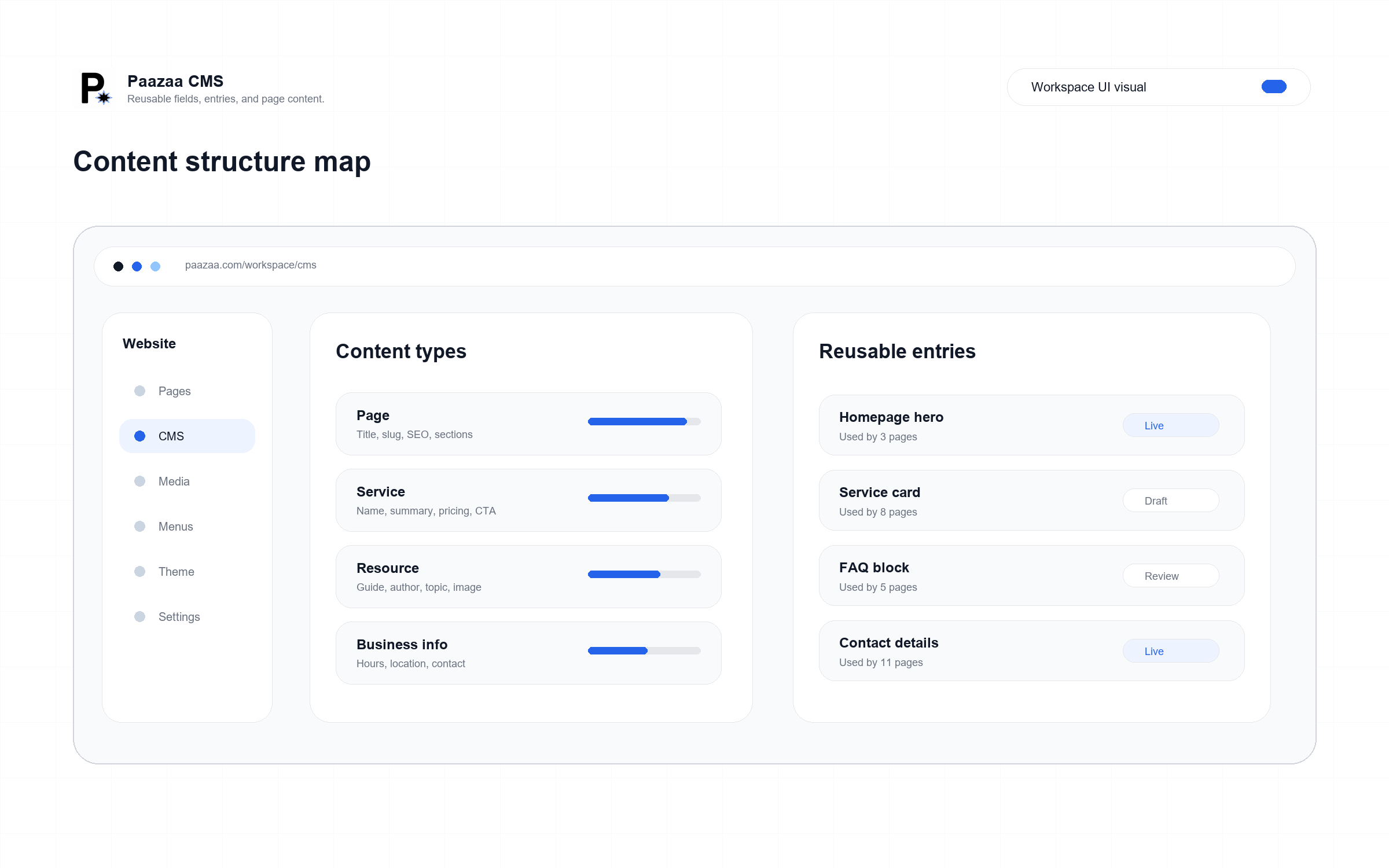
Structured Content Models
Define repeatable content types and fields for services, pages, FAQs, resources, and business details before the site gets messy.
Launch new pages faster without duplicating core content.
Reusable Updates Across Pages
Change shared details once, then apply those updates across every page and section that depends on them.
Keep service details, calls to action, and business information consistent.
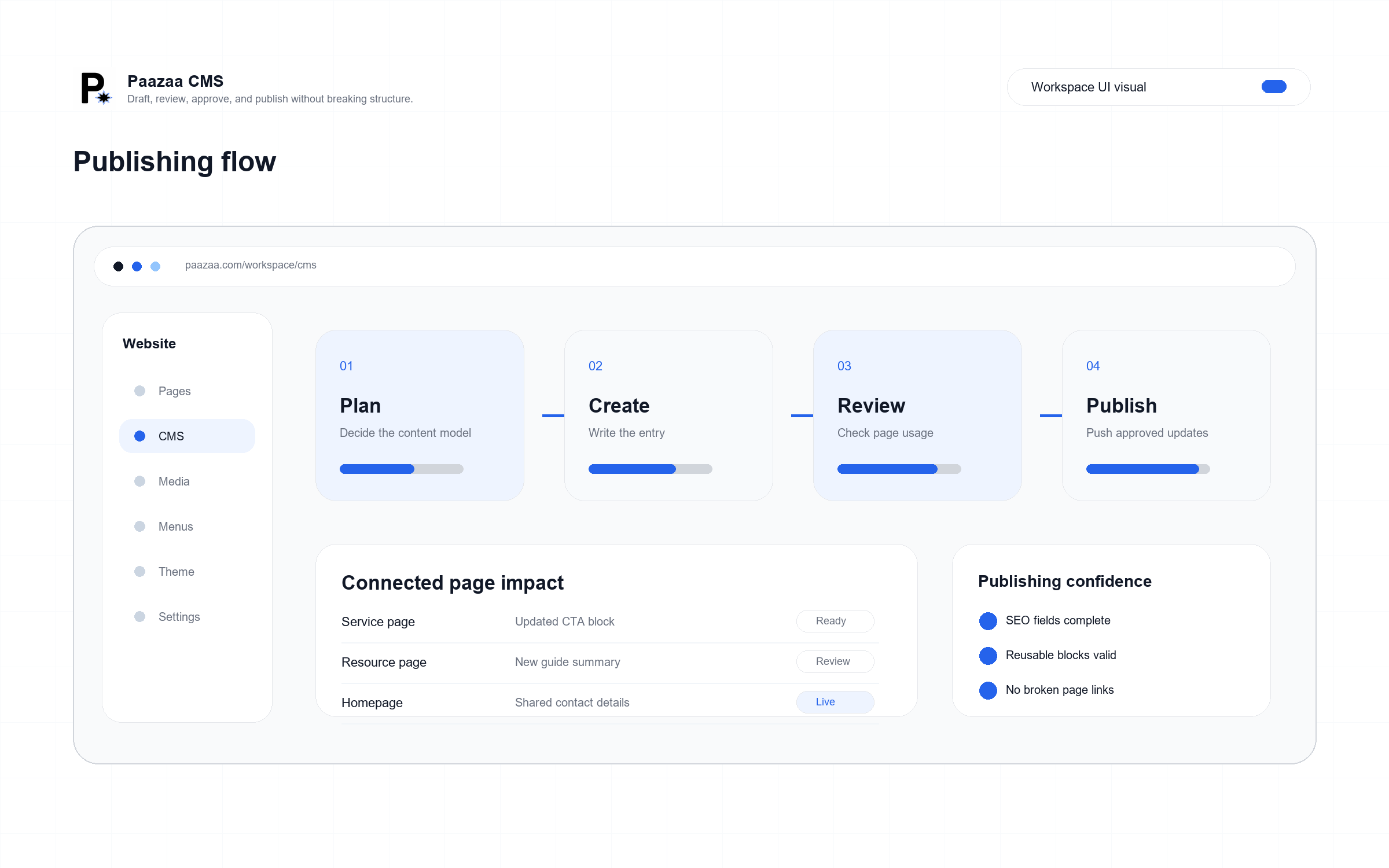
Safer Draft-to-Publish Flow
Let teams draft, review, and publish content updates without touching layout structure or risking accidental page breakage.
Reduce publishing errors while improving team editing speed.
Build a content engine your team can trust after launch
Model content once and reuse it across service pages, landing pages, and resources
Update shared business details in one place instead of chasing copy across multiple pages
Publish approved changes with clear review steps and lower risk
In-depth guide.
Why Content Work Slows Down After Launch
Most website teams feel strong on launch day, then lose speed a few months later. A service description changes, a policy is updated, or seasonal hours shift, and the same message has to be edited across multiple pages. One page gets updated, another is missed, and internal teams start sharing different versions of the same business detail.
This is usually a structure problem, not a writing problem. Content operations works when shared business information is modeled once, reused intentionally, and published through a clear workflow.
- Scattered page text creates version conflicts
- Layout-coupled editing increases post-launch risk
- Reusable content structure restores speed and consistency
Model Once, Reuse Across Every Important Page
The key shift is simple: define repeatable content types before scaling page count. Instead of treating each page as a one-off document, create clear models for services, offers, FAQs, locations, proof points, and recurring calls to action. Then require the fields that matter so pages stay complete and aligned.
This approach does not limit creative writing. It removes repeated manual edits. Writers still adapt message and tone per audience, while operators keep shared facts consistent. A connected CMS lets teams update core details once and trust those changes wherever the content is used. That improves output speed without lowering quality.
- Define models around real publishing patterns
- Require key fields on high-value pages
- Reuse approved entries across templates and routes
Set Clear Roles for Draft, Review, and Publish
Content systems fail when nobody knows who owns the final decision. Teams need explicit role boundaries for drafting, reviewing, approving, and publishing. Subject-matter contributors should be able to update facts. Editors should enforce clarity and consistency. Operators should control release readiness for high-impact pages.
Good governance is practical, not bureaucratic. Urgent corrections must be possible, but strategic pages still need review trails and readiness checks. A reliable flow shows what changed, where it appears, and whether required standards were met before publish. That visibility builds trust and reduces expensive regressions.
- Assign ownership for each workflow stage
- Review change history before publish
- Use readiness checks for high-impact updates
Run a 90-Day Rollout With Measurable Outcomes
Adopt this system in phases. Days 1 to 30 should focus on duplicated-content audit and minimum viable models for service and offer pages. Days 31 to 60 should focus on migrating priority pages with review on every release. Days 61 to 90 should expand to FAQs and proof blocks while tightening internal linking and metadata consistency.
Measure speed and quality together: draft-to-publish time, correction rate, and stale high-impact claims. If speed rises but errors rise too, governance is too loose. If quality rises but output slows, process is too rigid. The target is predictable publishing with stable customer-facing content.
- Use phased rollout instead of big-bang migration
- Measure cycle time and correction rate together
- Tune governance based on publishing outcomes
Business results to watch after rollout
- 1
Launch new pages faster without duplicating core content.
- 2
Keep service details, calls to action, and business information consistent.
- 3
Reduce publishing errors while improving team editing speed.